
Do Americans Know Themselves?
At What Point Do You Have To See What You've Refused to See?

I’ve just returned from an enjoyable visit to Ireland. (I drove through Bruff but didn’t really stop except for a few pictures. I was preoccupied for that portion of our trip by the terrifyingly small rural roads I was on south of Limerick, which I had to share with large farm equipment that was heading out to cut silage.)
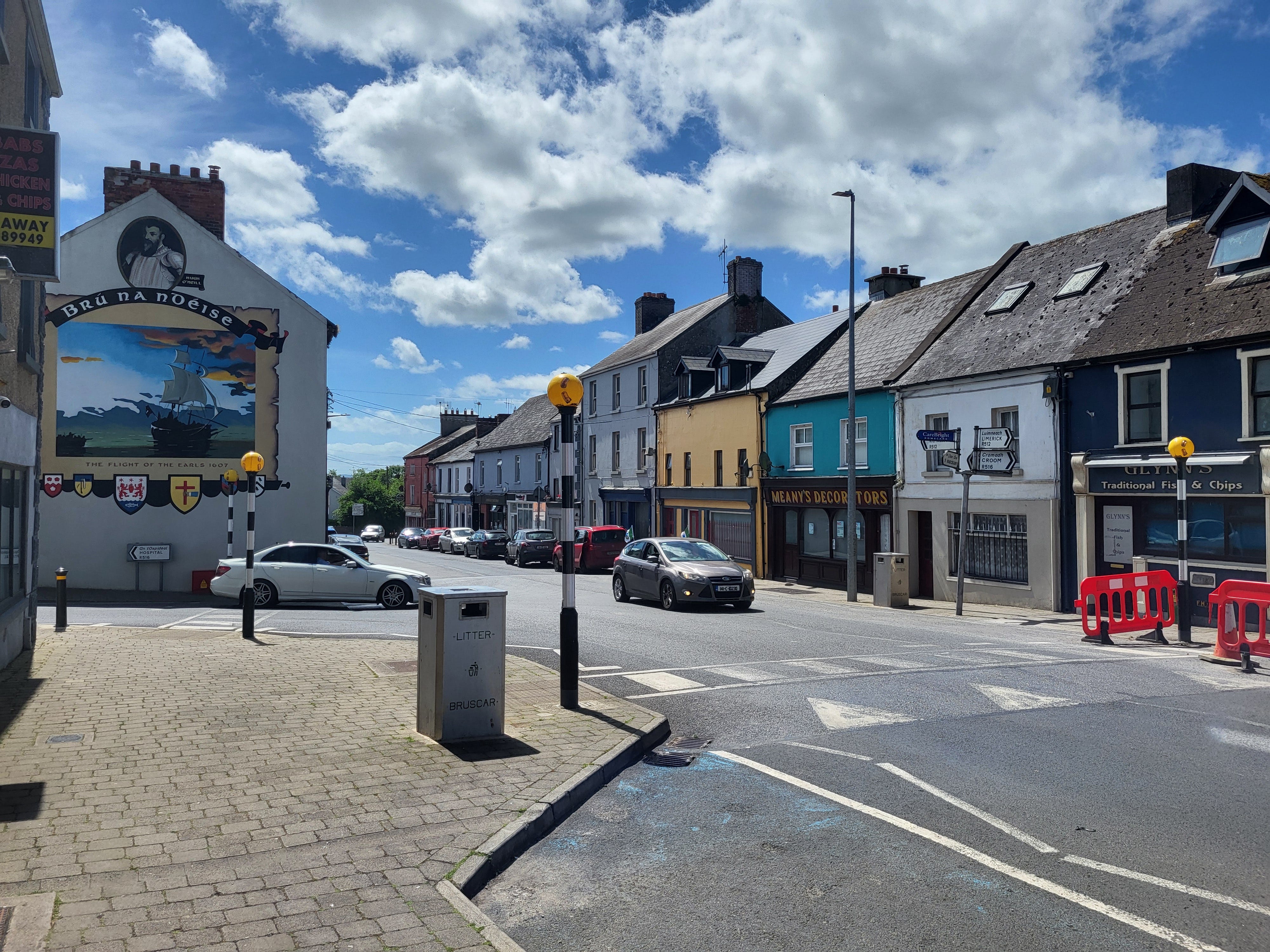
I did feel an interesting disjunction between the beautiful landscapes I saw in southwest Ireland and my reading of Fintan O’Toole’s excellent We Don’t Know Ourselves: A Personal History of Modern Ireland.
Before the trip, I plowed through a mini-historiography on Ireland in the last month. I realized that, like many Americans with Irish roots, my knowledge was long on hazily romantic nationalism and short on a critically informed understanding of the historical specifics. As is the case with many other countries in western and central Europe, ethnonationalist myth-making in the 19th and early 20th Century has smoothed over a multitude of complexities, some of which were real revelations to me.
I’ve had that experience of revelation from O’Toole most of all, however. Every chapter of the book has either introduced me to some aspect of post-1945 Irish history that I hadn’t every really known before or has filled out my understanding of a whole range of names, events, and stories that I only knew through the top-level generalities of news coverage.
I suppose the stereotypical thing for outsiders to know about Ireland is the history of The Troubles. But if there’s anything I knew a fair amount about before my recent reading, it’s that topic, and not the least because it was the main thing the international press wrote about Irish current affairs was the Troubles and the main subject of films about modern Ireland was as well.
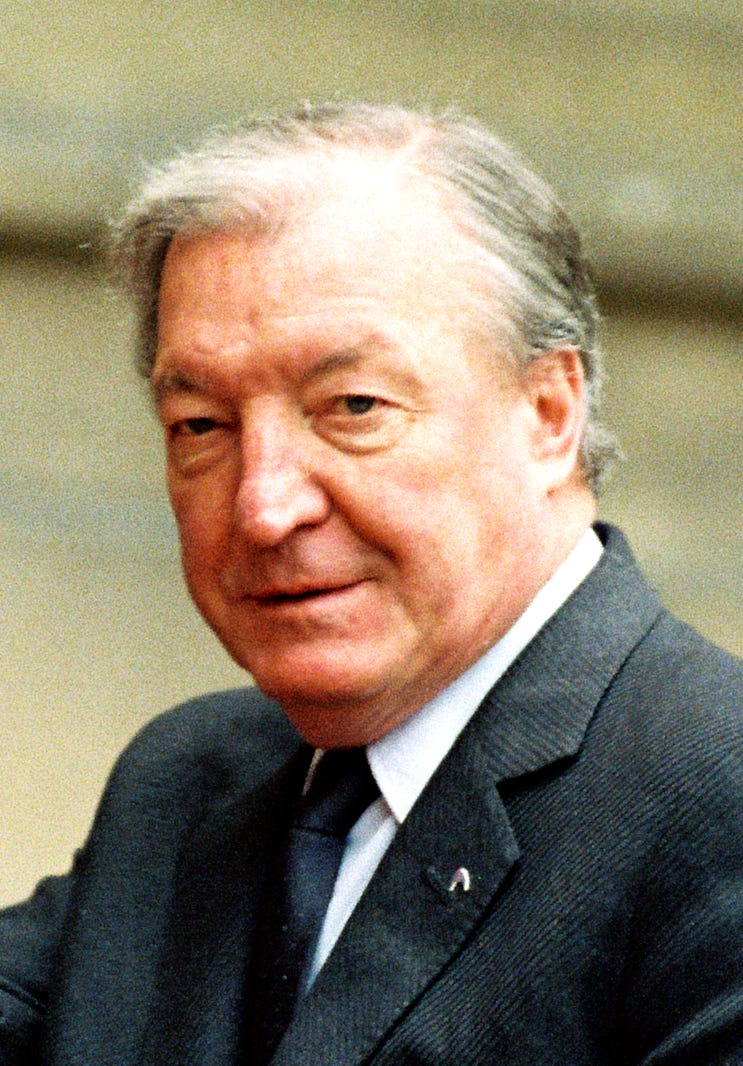
What’s grabbed me much more out of O’Toole’s book is the history of Charles Haughey, one of the most prominent postwar Irish politicians. Haughey served as Taoiseach (the head of government) three times and was a major political actor even when he wasn’t in power. He serves as a central icon in O’Toole’s thematization of modern Ireland.
O’Toole’s repeated motif is that the general Irish public, as well as its political and social leaders, has spent most of Ireland’s national life from the creation of the Irish Free State until the early 2000s working hard to not know what they knew. To not know that in an era when contraception was banned that women got the Pill from doctors in the name of medical treatment for irregular menstrual cycles. To not know that women who wanted an abortion went to England to get one. To not know that the Christian Brothers running schools beat and raped their male students, and that young women who got pregnant outside of marriage were effectively imprisoned and their children taken from them. To not know that prominent priests had lovers and children, and that many piously Catholic political leaders had mistresses out in the open.
To not know that Charles Haughey flaunted the kind of wealth that only multimillionaires had without any possible explanation for his riches besides comprehensive corruption. To not realize that Haughey’s style of corruption not only suffused much of the Irish Republic’s government but spread into a wider tangle of bad debt, everyday flouting of financial laws and regulations by many ordinary people, and a hollowing out of the banking system in particular.
In O’Toole’s interpretation, as a series of unavoidable revelations about all of these “unknown knows” took place in the 21st Century, the Irish public welcomed the deflation of their pretenses and their illusions. They finally looked straight at what they’d been averting their eyes from. He writes, “Ireland came to accept that its familiar self had hidden a deep estrangement—of exile, of reality, of ordinary experience…it also allowed itself, gradually, painfully, and with releif, to contract, to shrink away from the stories that were too big to match the scale of its intimate decencies. We end up, not great, maybe not even especially good, but better than either—not so bad ourselves.”
That, he argues, is what led to the striking electoral reversals of late 20th Century votes and policies in which surprisingly large numbers of older voters joined the large majority favoring abortion rights and same-sex marriage. People who had been too afraid to speak their mind in the face of a consensus favoring keeping the known unknown were suddenly able with relief to say that they’d always felt otherwise.
I presume that many Irish readers have resonated with O’Toole’s characterization and the somewhat similar story in Diarmaid Ferriter’s The Revelation of Ireland given that both books have been bestsellers there. I certainly found it convincing both as a general reading of collective feeling and a specific explanation of how someone like Haughey could have done all of what he did in plain sight and gotten away with it for decades.
That exact point, however, made me wonder whether something of the same thing couldn’t be said about Americans. Do we have known unknowns? Do all communities, all publics, have a similar habit of collective evasion of truths they’d rather not know?
Answering that question at first requires engaging what “they” means in that question. O’Toole is aware Irish women experienced knew more and differently with some of the known unknowns, for example, and he does some work to sketch out how it all looked through the eyes of women in his own life as well as prominent leaders like Mary Robinson, but there remains the fact that the whole story is different if those lives are moved to the center of the “we” of modern Ireland.
I would say the same for post-1945 America. There are several major narratives where there were indeed unknown knowns that have demonstrated tremendous resiliency in the face of successive waves of revelation. Most notably, white Americans have managed to continuously return to not knowing what they have come to know about the lives of Black Americans in particular and other racial groups overall. We’re in the middle of an especially sharp effort to overturn knowledge gained through a decade’s worth of videos of violence by police as well as knowledge created through education and public history. The “crisis of masculinity” that is such a regular feature of our current public discourse represents an equally coordinated effort to forget what was so strongly revealed about power and sexual violence in the last decade.
But this points also to a difference between what O’Toole reads in modern Ireland’s history and how I would see the United States in my own lifetime. What he describes is a kind of tacit knowledge that everyone had and no one spoke about. America has been full of speech, public and private, about what some of us are recurrently are forced to know and then work hard to unknow. America in this sense is a discursively big and plural space, even in its eras of greatest censoriousness and bourgeois politesse. We have had our Comstocks who have functioned somewhat like Archbishop McQuaid, but their legal and cultural power over a highly mobile and pluralistic society has also been considerably less even at the height of their authority.
And I don’t think I can quite extend the generosity and benediction that O’Toole does towards the Irish public when it comes to Americans who refuse to know what they know about political and corporate leaders. Haughey, in this reading, got away with what he did by inhabiting tropes of being a rascal, a clever fella, a fox who stayed just ahead of the hounds. There are American politicians (including some rather prominent Irish-Americans) who’ve lived into that niche too, such as the Ohio Democrat James Traficant. If you’re our bastard, then you can be forgiven—and you can be a sort of avatar for your constituents’ own uneasy relationship to the law. Trump is in many ways the ultimate example of this construction: for the people who cleave to him, he can do no wrong, and that’s not because they refuse to know what it is that he does.
That’s part of the problem—white Americans who embraced Ronald Reagan’s complaints about Black “welfare queens” or who have invested deeply for decades in complaints about illegal immigrants from Latin America and Asia have often been perfectly happy to cheat on their own taxes, to bend the rules or fake evidence to collect benefits, and to look the other way when the illegals are providing cheap labor (or when the illegals are white, as in the case of many Irish citizens living in the US in the 1980s.) “The laws is for thee, not for me” is not an unknowing construction. It’s quite conscious and quite programmatic. It requires collaborative effort and shared social knowledge.
So I can buy that some large proportion of the Irish public at Haughey’s political zenith managed to not know what they knew about him. I’m not sure I can buy that much of the base of the Republican electorate have bothered with anything like that effort to not know what they have known about the GOP’s approach to power—and about how that power has not merely licensed corruption but has also accepted the sexual immorality of many GOP elites.
If there’s a subsection of the American public who really does not know what they know, in fact, I’d say it’s a significant proportion of Democratic and independent voters, the educated professionals and white-collar managers, the people who think of themselves as the sensible and rational center. I think they know what they frequently profess not to know about the entanglement of their social worlds and livelihoods with institutions, interests and ideologies that block or divert the kinds of reforms and transformations that the sensible center often claims to favor.
That’s where I see a kind of social piety that “doesn’t know itself”, where I see people maintaining first and foremost their own respectability in the face of an accelerating crisis that is driving the whole society into failure and fascism. Here perhaps we can hope for something like what O’Toole and Ferriter describe happening in Ireland—a series of public revelations that allow the older respectables to at last admit that they’ve always wanted real social change and always known of their own complicity in keeping that from happening. I don’t know that any constituency or group of Americans are ever going to accept the kind of diminishment that O’Toole attributes to contemporary Irish residents—an empire that is over is different than a former colonial subject that never quite lived into its nationalist romance—but maybe when our bottom finally drops out altogether, those of us who have been looking away will finally look unsparingly at our reality. For the moment, at least, some of us are still choosing to be blind, both about some of our fellow citizens and about ourselves.
Image credit: By © European Union, 2026, CC BY 4.0, https://commons.wikimedia.org/w/index.php?curid=177961640