
Git Gud
Friday's Child Knew This Was Coming

In the history of information technology and digital culture, there’s one inevitable development you can count on, something that’s as predictable as death and taxes.
When a new product, platform, application, service or interface launches and fails to take hold, the designers and people currying favor with the designers and the power users who have remade their reputation capital around the new thing will always, without exception, blame the users for doing it wrong. The hype cycles have gotten bigger since the 1990s and the financial stakes have grown enormously, but the core DNA of this essential dialectic has not changed.
Gamers are especially familiar with this pattern. Even the worst designed games by any metric will attract in rapid measure a devoted group of acolytes who will march to war on their keyboards against any nay-sayers who have tried the game and found it wanting. The game’s not bad, they will insist. You just don’t know how to play it right. Playing it wrong, in this patterned response, is never just a lack of technical acumen. It can’t be fixed by patient instruction from the proficient player or by an FAQ laying out how to do it right. Playing it wrong is a character defect that afflicts the sheepled masses. It is a weakness of the soul, a deep lack of dedication and discernment. The gamers who scorn the chosen game didn’t deserve it anyway, because they could not see behind its facade of incompetent design to the deep core of its transformative brilliance. When the bad game sinks into its final obscurity, denied its DLC, bereft of its sequels, the devoted move from scorn to anger as they gather at the corpse of their martyred idol. Look what you did to my boy! Look what you took from the world!
It goes that way with every tool and service that doesn’t hit the high notes that its hype promised. Occasionally the devotion seems warranted, if perhaps a tad disproportionate. I hear you, WordPerfect userbase. Now and again, an app that’s working beautifully gets cut down in its prime by a cruel owner. RIP, Google Reader. But a lot of the time, the outcry against all the bad users who just don’t know how to do it right is about trying to salvage an expensive launch of an ill-considered, little-desired, overdesigned product that is being forced on users, incorporated into other tools, and promoted incessantly by a fawning tech-culture coterie who have either been bought off or hope to ride the hype train for years to come.
The end comes fast when the failed product is spectacularly bad and extraneous to the work and play that people already do. The hype in that case is just a laughable late-night infomercial. The end comes slow when there’s big money at stake and maybe when there’s something buried underneath all the hype that could be redeemable somehow. Sometimes a game that plays poorly at launch gets saved when the UX is redesigned, when content gets added, when a really terrible game mechanic gets massively revised, when the optimization that got neglected in crunch gets addressed. Most of all, when the fixes come in, the bad can become good because the designers, the publishers, and even the devoted players learn to walk back the hype, when they find it in themselves to say, “Yes, this sucked at first, and we never should have said it was the best game ever designed and a revolution in gaming itself.”
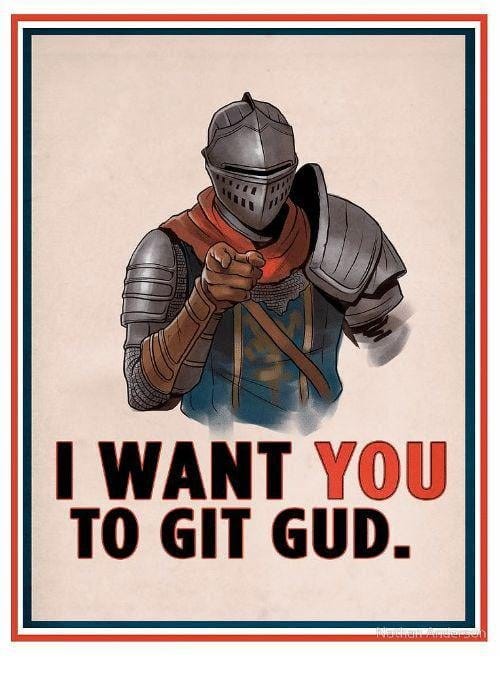
In the meantime, in the gap between “This is the best ever” and “Here is the modestly decent product hiding inside the overhyped disaster”, all the people who have tickets on the hype train will double down again and again on the accusation against an uncaring world: you are the problem. You are not good enough. You must change and become worthy of what we, in our kindness, offer to you.
This pattern has already shown up in the rollout of generative AI. If you’re opposed to generative AI in principle, we’re told, then that just reveals you’re bad at your job, bad at life, a reactionary enemy of the future. But worse yet, if you’ve tried to use generative AI to replace white-collar workers and discovered that it actually can’t do the jobs that people have been doing for a century or more? Then that proves the problem is you, your office, and your remaining workers.
Or so says Keith Ferrazzi, tech consultant and thought-leader, in the New York Times. The fault, dear America, lies not in our Claude but in ourselves, says Ferrazzi. You can’t be worthy of your AI until you change yourself to be more in its image. Generative AI is innocent of your sinful ways, your tendency to communicate as if you expected other human beings to connect with you in imperfectly human ways. You are the “vague requester”, you are the “context hoarder”, you are the “overdelegator”. You have trusted in the agency of other human beings to pursue tasks or goals in their own way, to interpret instructions, to pick up on non-verbal cues, and to apply skepticism in knowing that you, the boss, may not actually want done what you pretend you want done. Purify yourself, make yourself worthy of working with this innocent form of new and superior life, and you will be saved. Indeed, you will find that you become a better human to humans, a better manager and leader, if albeit just in time to look around the office and find that you accidentally got rid of all the humans while you were purging yourself of your bad habits.
Unfortunately, this time around the pattern is not just about furious arguments on a subreddit about a game with a few thousand devotees. Nor is it even as relatively high-stakes in terms of investment and hype as Google+ or the AOL-TimeWarner merger. The pattern this time is forming up around a global-scale push of tech companies into massively disproportionate capex expenses on behalf of a service product that they have promised will be, must be, as consequentially transformative as industrialization in the 19th Century, and around investment money that is so deeply committed to generative AI that “too big to fail” understates the situation by several magnitudes. This time the devotees are going to keep pushing their accusations that AI isn’t the failure, we are, until they’ve made that come true one way or the other. Planes may fall from the sky, offices may become hallucination farms, AI surgeons may amputate rather than stitch, but that will be our fault for flying, our fault for making a world that requires administrative infrastructures, our fault for having flesh in the first place.